
Panels engineered around the roof you actually have.
Georgian terrace, flint cottage or new-build bungalow, every quote starts with an MCS-certified survey of your specific property, not a standard package pulled off a shelf. Solar and battery installations are also currently zero-rated for VAT, a relief that runs until 31 March 2027.
 Hampshire, home of the chalk streams
The right fit for your property.
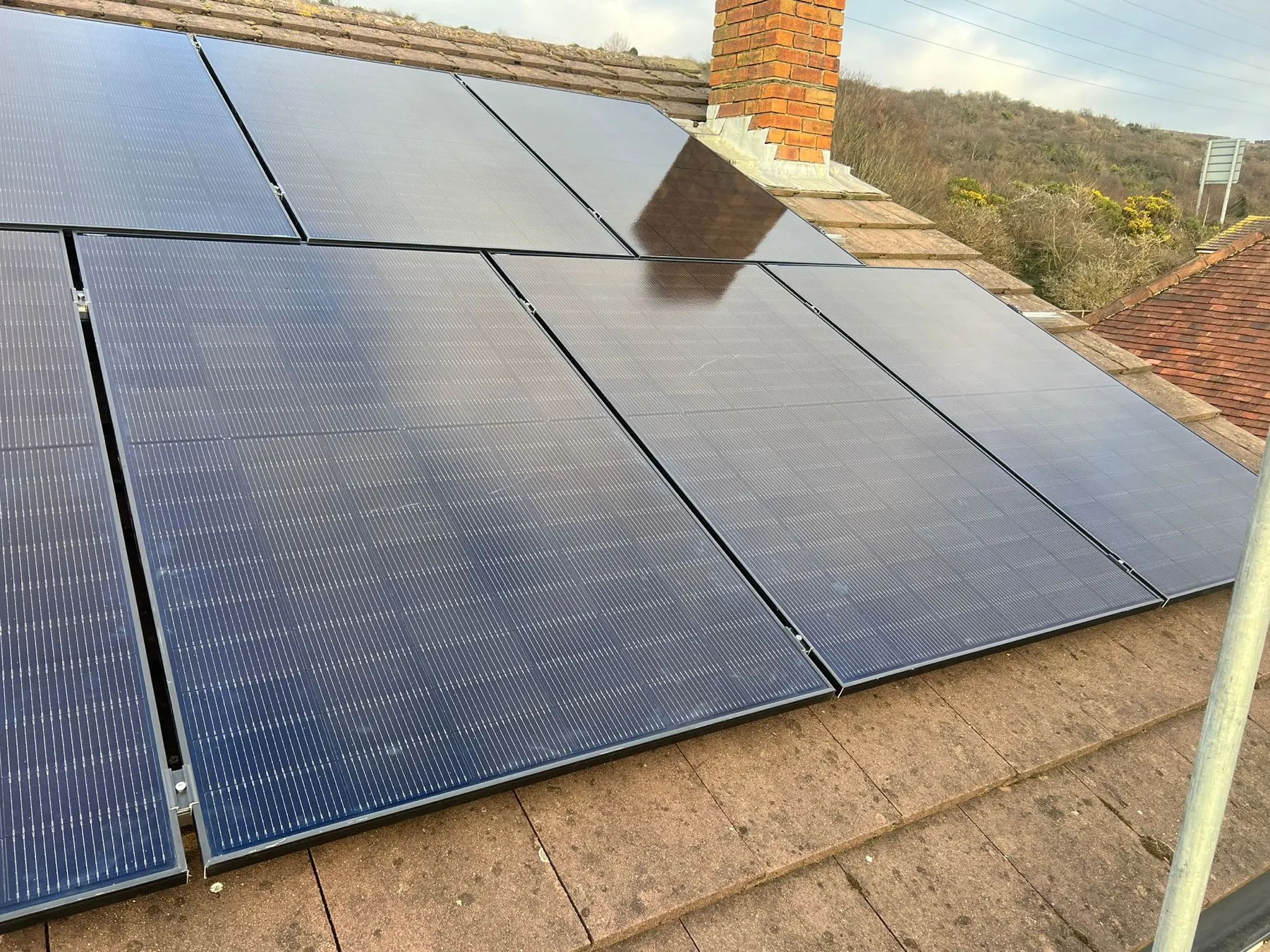
Roof-mounted covers most homes we quote, and it’s usually the most cost-effective option where there’s enough clear, unshaded space. Hampshire has plenty of larger rural plots too, particularly out towards the New Forest fringe, where a ground-mounted array can make more sense than fitting panels onto a shaded or awkwardly pitched roof.
Either way, panels generate most of their power in the day, often when a household is out or using the least electricity. If that sounds like your pattern, battery storage is worth adding so that generation doesn’t just get exported at a lower rate than you’d pay to buy it back.
String inverter
One unit runs the whole array. The cheapest option, and fine for a simple, unshaded roof.
Microinverters
One small unit per panel. Costs more, but a chimney or dormer shading part of the roof won’t drag the whole array down.
Hybrid inverter
Built with battery storage in mind from day one. The sensible default if a battery’s on the cards now or later.
Looking after your system.
Panels have no moving parts, so there’s very little to go wrong. An occasional check for moss, debris or shading from new growth is generally enough. Manufacturers typically back panels with a 25-year-plus performance warranty on top of a shorter product warranty, and we add our own workmanship warranty on the install itself.
On Hampshire’s older Georgian and Victorian terraces, we check roof construction and tile condition as part of every survey. Listed buildings and homes within a conservation area, common around Winchester and Romsey, sometimes need planning permission even where it wouldn’t otherwise be required.
How long does an installation take?
One to two days for most homes, depending on system size and roof access. Scaffolding usually goes up the day before, and your installer will walk you through the system before they leave.
Will I need planning permission?
Most Hampshire properties fall under permitted development, so no application is needed. Listed buildings and some homes in conservation areas are the main exception, where permission can be required even for work that would be permitted development elsewhere.
Can solar go on a thatched roof?
Not directly. Thatch can’t safely take the fixings or the weight, and it’s a fire-risk factor insurers take seriously. A ground-mounted array or an outbuilding roof is usually the better option, which we’d talk through at survey stage.
How much roof space do I need?
It depends on your household’s electricity usage and how many panels you want fitted, which is exactly what a site survey establishes. We model your roof’s usable area, orientation and shading before recommending a system size.