
Hold onto what your panels generate.
A battery banks your solar generation during the day and releases it in the evening, instead of it being exported to the grid at a lower rate than you’d pay to buy it back. Solar and battery installations are also currently zero-rated for VAT, a relief that runs until 31 March 2027.
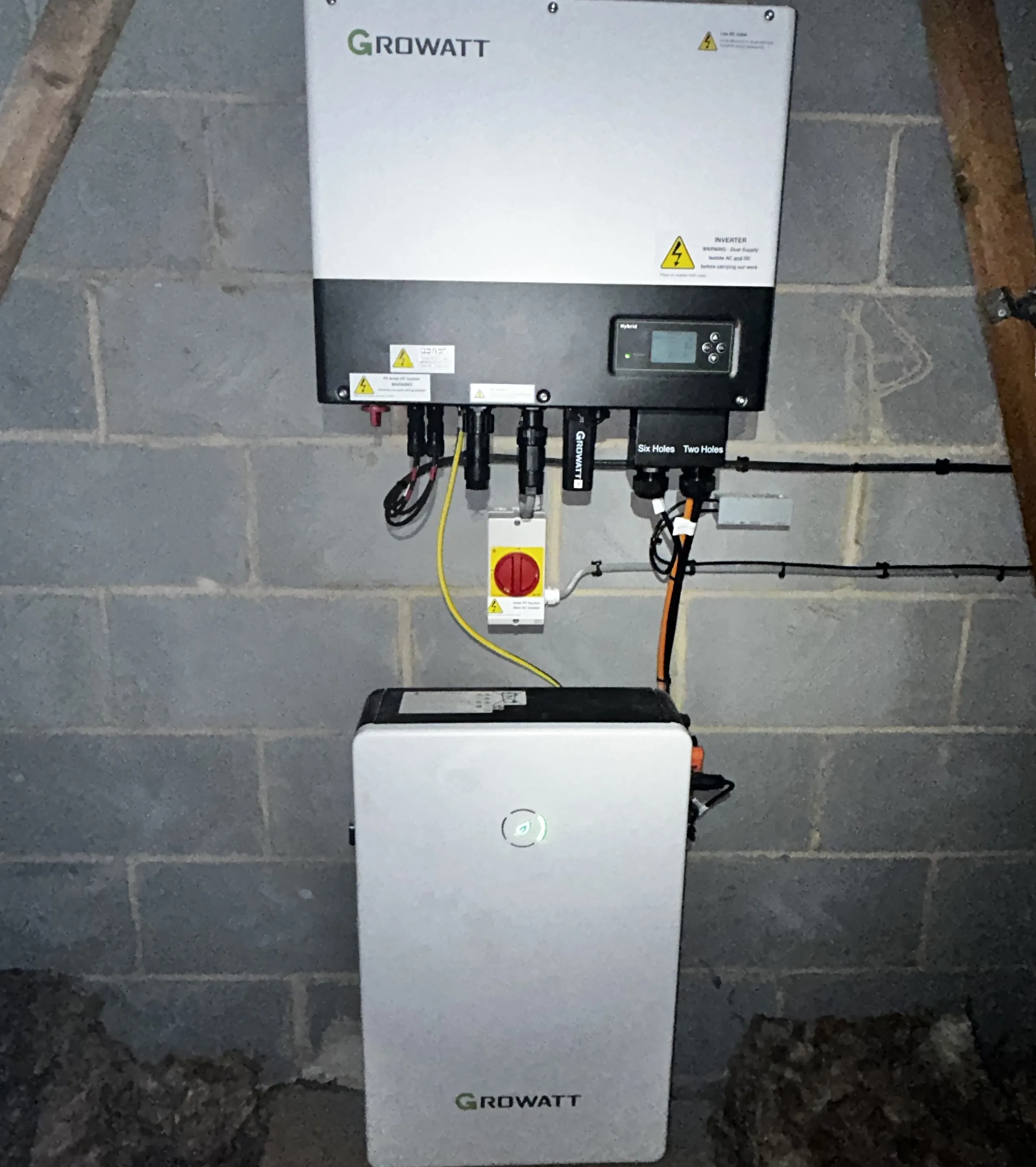
Storage, not just generation.
Most Hampshire households are out at work or school for a good part of the day, right when panels are generating the most. Without a battery, that generation is exported at whatever rate your supplier offers, often a fraction of what you’d pay to import the same unit back that evening. That gap matters more here than it sounds: Southampton sees around 1,706 hours of sunshine a year, so a well-sited roof is generating a genuinely useful amount most of the day, not just for a couple of hours around noon.
Adding a battery keeps more of what you generate under your own roof, and gives you a buffer if you’re on a time-of-use tariff that charges less overnight. It’s a similar story whether you’re in a Southampton terrace with a small roof and modest generation, or a larger New Forest or countryside property with more panels to work with, the principle of storing daytime generation for evening use doesn’t change, only the size of battery that makes sense.
How we work out the right size.
Usage pattern
We look at when your household actually uses electricity, not just how much.
Panel output
How much your array generates on an average day sets the ceiling on what’s worth storing.
Tariff check
An export or time-of-use tariff changes the maths on what size pays back fastest.
Right-sized quote
You get a battery sized to your home, not the biggest unit on the price list.
Can I add a battery to existing solar panels?
Yes, in most cases. Depending on your current inverter, we either connect a battery directly or, if it’s an older string inverter, may recommend an AC-coupled battery that works alongside it.
Where does the battery get installed?
Usually a garage, utility room or outbuilding, though some units are rated for outdoor installation. We confirm the best spot at survey stage based on your property.
What happens during a power cut?
Most grid-tied battery systems switch off for safety during a power cut, the same as solar panels alone. A backup-capable setup can keep essential circuits running, but this is a specific configuration worth discussing if it matters to you.
Does a battery affect what I can claim on export tariffs?
No, adding a battery doesn’t change your MCS certification or your eligibility for the Smart Export Guarantee, it simply changes how much of your own generation you’re exporting versus using yourself. We’ll talk through the tariff maths as part of your quote.